
 By
By SEO today goes beyond merely achieving high rankings on Google. In 2026, search has become AI-driven, conversational, and predictive. Search engines now generate summaries, answer queries directly, and recommend sources inside AI-generated responses. Whether you run a blog, eCommerce store, or local business, the right AI tools for small businesses can supercharge SEO efforts and save time. If your website is not optimized for this new ecosystem, you are already behind.
The reality is simple: traditional SEO alone is no longer enough. You now need intelligent automation, entity optimization, structured content, and AI visibility tracking. This is where the best AI tools for SEO become essential.
In this complete guide, you will learn:
- How SEO has evolved in 2026
- What AI SEO tools actually do
- The best platforms available right now
- A step-by-step framework to use them
- Strategies for ranking in both traditional and AI search
Let’s begin.
The Evolution of SEO in 2026
From Keyword Optimization to Intent Intelligence
A few years ago, SEO success depended heavily on keyword placement and backlinks. While those elements still matter, search engines now prioritize intent, context, and entity relationships.
Modern search algorithms understand:
- What the user is trying to accomplish
- Whether the content solves the problem
- If the site demonstrates topical authority
- How structured and trustworthy the content is
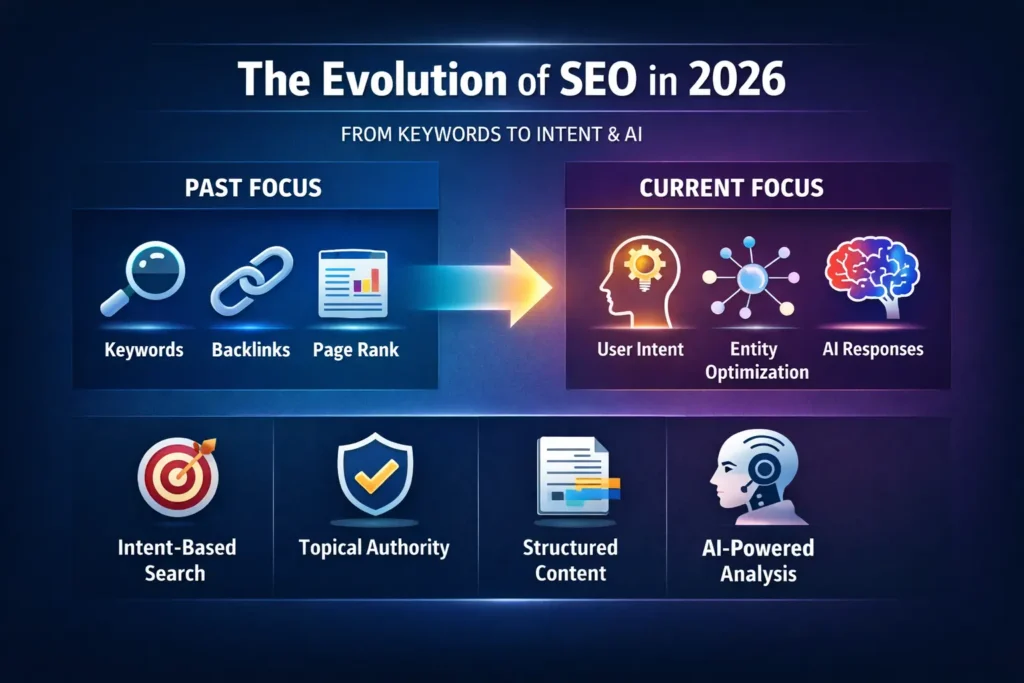
This shift has made manual optimization inefficient. AI-powered tools now analyze ranking patterns across thousands of pages and provide data-backed optimization strategies.
What is Generative Engine Optimization (GEO)?
Generative Engine Optimization focuses on optimizing content so it appears inside AI-generated responses. Instead of simply ranking on page one, your goal is to become a trusted source cited by AI systems.
When someone asks a conversational query, AI engines extract structured, authoritative information. If your content is clear, entity-rich, and well-formatted, it has a higher chance of being included.
GEO works alongside traditional SEO and Answer Engine Optimization (AEO), creating a unified strategy for modern search visibility.
SEO vs AEO vs GEO Explained
Conventional SEO focuses on boosting a website’s position in search engine results.. AEO focuses on optimizing for featured snippets, voice assistants, and direct answers. GEO expands this concept further by targeting AI-generated summaries and conversational search systems.
In 2026, the smartest approach is to use both rather than pick just one. It is integrating all three approaches using AI-driven tools.
What Are AI SEO Tools?
AI SEO tools are advanced platforms that use machine learning and large-scale data modeling to analyze ranking factors, competitor behavior, content structure, and technical performance.
Unlike older SEO software that only displayed data, AI tools interpret patterns and provide actionable recommendations. They identify:
- Content gaps compared to top-ranking competitors
- Semantic keywords that strengthen topic relevance
- Internal linking improvements
- Technical site health issues
- AI visibility opportunities
They reduce manual work and increase decision accuracy.
How We Picked the Best AI Tools for SEO Success in 2026”
To ensure credibility, tools were evaluated based on real-world usage and measurable impact.
The selection criteria included:
Accuracy of keyword and ranking data
Depth of AI-powered content recommendations
Ability to track AI search visibility
Technical SEO automation capabilities
Ease of integration into existing workflows
Pricing relative to feature set
Suitability for beginners and agencies
Only tools offering strategic value in 2026 were included.
Best AI Tools for SEO in 2026
Semrush
Semrush remains one of the most comprehensive AI-driven SEO platforms available today. It combines keyword research, competitor analysis, technical auditing, and content optimization inside one dashboard.
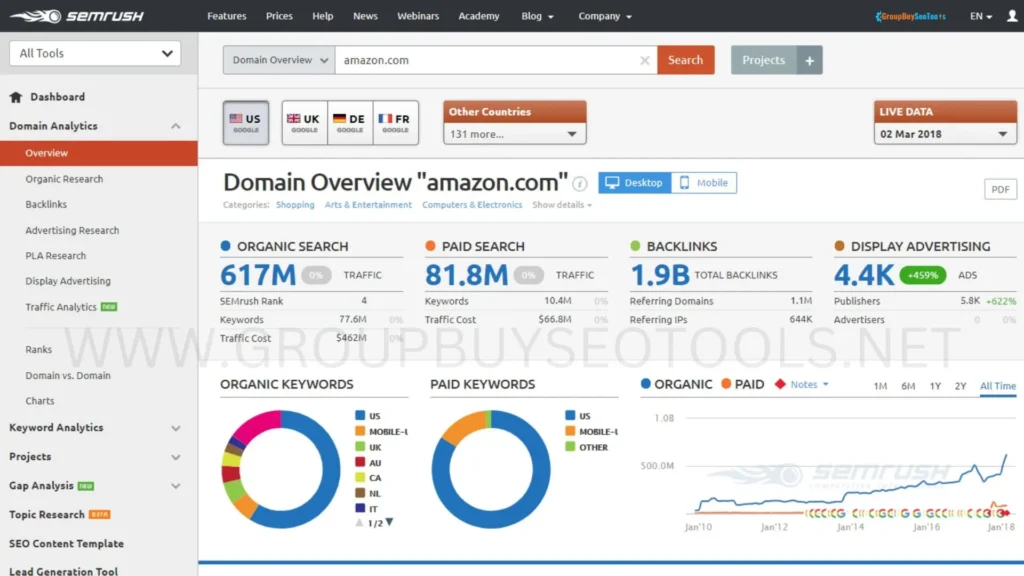
Its AI-powered features analyze ranking volatility, identify keyword opportunities, and provide optimization templates based on real-time search data. The platform also includes visibility tracking, which is crucial for monitoring performance in evolving search environments.
Semrush is particularly effective for agencies managing multiple clients because of its reporting and workflow integration capabilities. While it may be expensive for beginners, it offers unmatched depth for serious SEO professionals.
Ahrefs
Ahrefs is widely known for its backlink database and competitor research capabilities. In 2026, its AI-driven enhancements have made keyword difficulty scoring and SERP analysis more predictive.
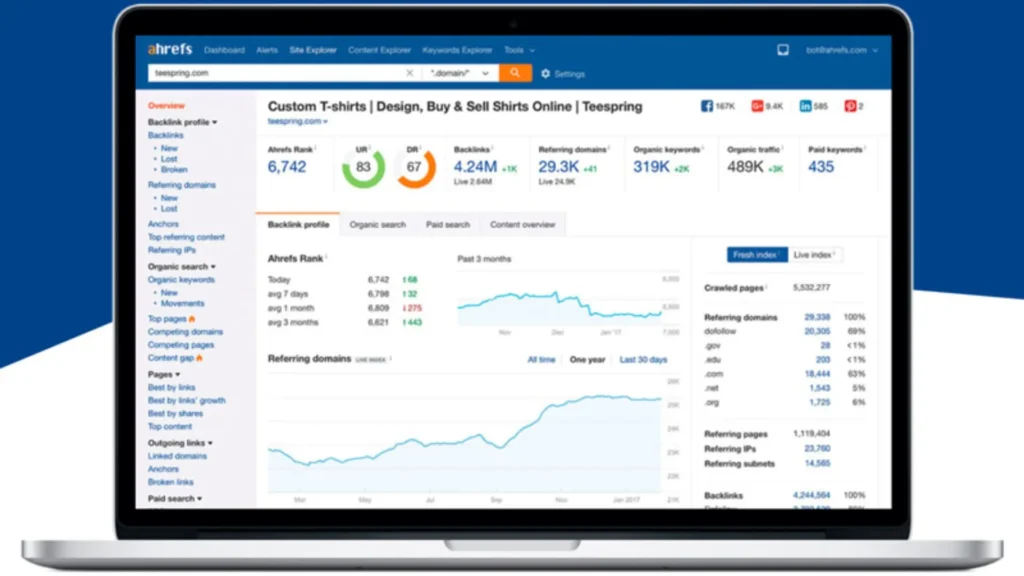
The tool excels at identifying link-building opportunities and analyzing content performance across industries. While it is not primarily a content optimization platform, it remains one of the strongest research tools for authority building.
For businesses focused on long-term organic growth and competitive intelligence, Ahrefs provides valuable strategic insights.
Surfer SEO
Surfer SEO specializes in content optimization. It analyzes top-ranking pages and generates real-time recommendations for word count, heading structure, semantic keywords, and entity coverage.
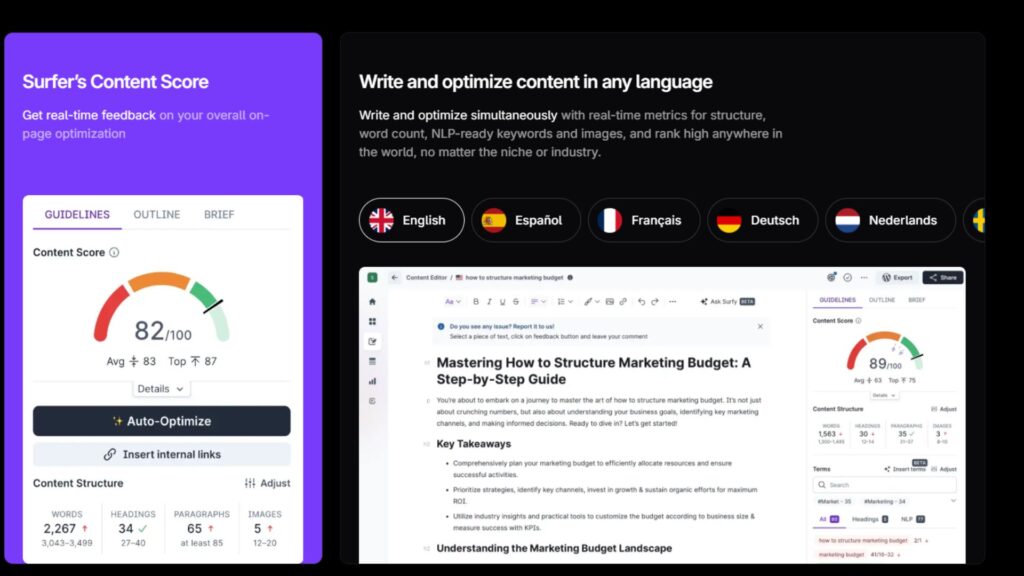
Its scoring system makes optimization clear and measurable. Writers can see how closely their content matches successful ranking patterns.
Surfer is ideal for bloggers and content teams looking to improve on-page SEO without deep technical knowledge.
Frase
Frase focuses on content research and AI-generated outlines. It extracts commonly asked questions from search results and helps structure articles for answer-based optimization.
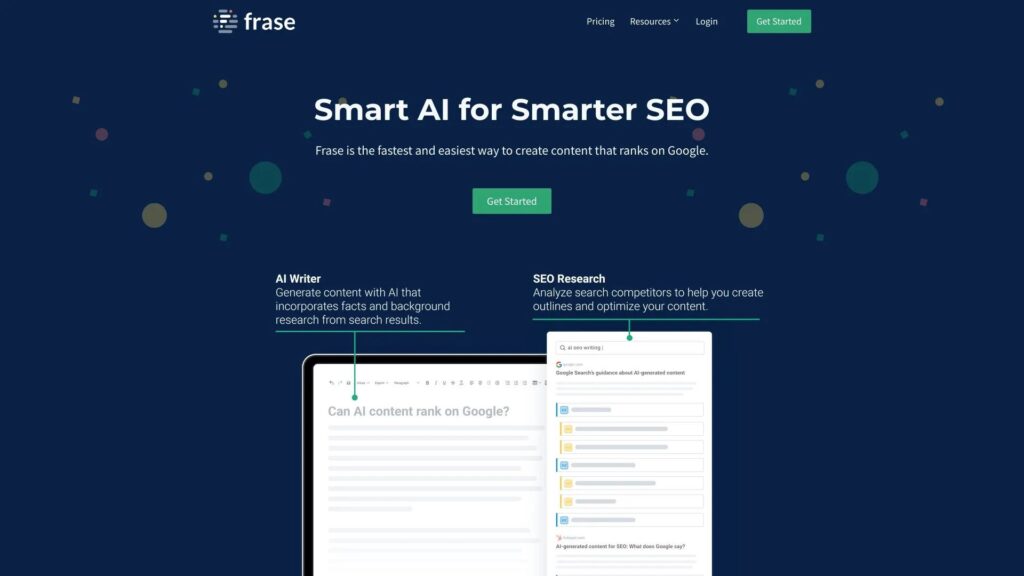
The platform is particularly useful for improving AEO and GEO performance because it emphasizes question clustering and conversational formatting.
Frase helps content creators align their articles with real search intent rather than guessing what users want.
SE Ranking
SE Ranking offers a balanced combination of affordability and functionality. It includes rank tracking, keyword research, competitor analysis, and automated audits.
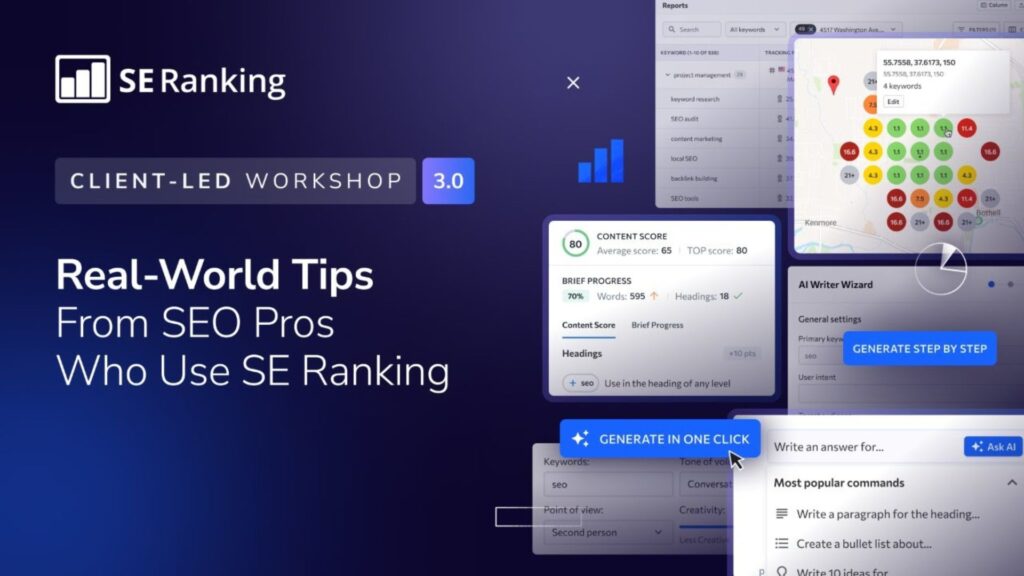
While it may not have the advanced depth of larger platforms, it provides reliable AI-driven recommendations suitable for small businesses and growing agencies.
For those starting their SEO journey, SE Ranking offers strong value.
Paid vs Free Plan Comparison (2026)
| Tool | Free Plan | Free Trial | Paid Plans | Best For |
| Semrush | ❌ No permanent free plan | ✅ 7-day trial | Starts around premium tier pricing | Agencies & advanced SEO |
| Ahrefs | ❌ No free plan | ❌ Limited free tools only | Paid subscription required | Backlink & competitor research |
| Surfer SEO | ❌ No free plan | ✅ Limited trial | Monthly paid plans | Content optimization |
| Frase | ❌ No permanent free plan | ✅ Trial available | Paid monthly plans | AEO & content briefs |
| SE Ranking | ❌ No permanent free plan | ✅ Free trial | Affordable paid tiers | SMBs & beginners |
Detailed Breakdown (Free vs Paid Explained)
Semrush
Semrush does not offer a permanent free plan, but it provides a limited-time free trial. After the trial, full access requires a paid subscription. It is mostly designed for professional use.
Ahrefs
Ahrefs’ full SEO suite is not available for free. Some limited free tools are available (like the basic backlink checker), but serious SEO work requires a paid plan.
Surfer SEO
Surfer SEO does not offer a permanent free plan. Sometimes trial access is available, but the main features are unlocked only through a paid subscription.
Frase
Frase does not offer a permanent free plan, but a trial is available. Content research and AI-generated outline features are included in the paid tiers.
SE Ranking
SE Ranking is budget-friendly. It does not have a permanent free plan, but a free trial is available. Paid plans are comparatively affordable, especially for beginners.
Comparison of the Best AI Tools for SEO
Semrush is best for comprehensive optimization and agency-level management.
Ahrefs dominates in backlink analysis and competitive research.
Surfer SEO excels in on-page content scoring.
Frase supports structured, answer-focused content development.
SE Ranking provides affordable all-in-one SEO functionality.
Choosing the right platform depends on your goals, budget, and workflow complexity.
Best SEO Strategies for AI Visibility in 2026
AI visibility requires more than keyword placement. It demands structured, authoritative, and context-rich content.
First, build topical authority through interconnected articles. Cover a subject comprehensively rather than publishing scattered posts.
Second, prioritize structured formatting. Clear headings and logical flow make it easier for AI systems to extract information.
Third, adopt a conversational tone. Modern search queries resemble natural language questions.
Fourth, integrate schema markup to provide structured data signals.
Finally, monitor and update content consistently to maintain relevance.
Common Mistakes When Using AI SEO Tools
Many users rely too heavily on automation. Publishing unedited AI-generated content damages credibility and engagement.
Another mistake is obsessing over content scores without prioritizing user value. Optimization should support usefulness, not replace it.
Ignoring search intent is equally harmful. If your content does not align with user expectations, ranking improvements will be temporary.
AI tools enhance strategy; they do not replace critical thinking.
Who Should Use the Best AI Tools for SEO?
Bloggers benefit from faster content optimization and ranking insights.
Agencies gain scalable workflow automation and reporting efficiency.
Ecommerce brands improve product visibility and category authority.
SaaS companies accelerate topical authority growth.
Local businesses strengthen niche visibility and competitive positioning.
AI SEO tools adapt to multiple use cases, making them valuable across industries.
The Future of AI SEO Beyond 2026
Search engines are moving toward zero-click results, predictive recommendations, and personalized responses. Voice search and multimodal queries are expanding rapidly.
Future SEO will rely on structured data, entity relationships, and user experience signals. AI will assist with predictive optimization, helping businesses anticipate ranking shifts before they occur.
The key is adaptability. Businesses that integrate AI tools early will maintain long-term visibility.
FAQs
What are the best AI tools for SEO in 2026?
The best AI tools for SEO combine keyword research, content optimization, technical audits, and AI visibility tracking. Platforms that integrate automation with strategic insights provide the strongest results.
How do AI SEO tools improve search rankings?
They analyze competitor patterns, search intent, semantic coverage, and technical health. By offering data-driven recommendations, they increase the likelihood of ranking success.
Are AI SEO tools suitable for beginners?
Yes. Many tools offer guided optimization workflows and user-friendly dashboards that simplify complex SEO processes.
Do AI SEO tools help with generative search engines?
Yes. Modern platforms track AI-driven summaries and help optimize content for structured extraction and citation.
Is traditional SEO still relevant?
Absolutely. AI enhances traditional SEO rather than replacing it. Strong fundamentals remain critical.
Final Thoughts
The best AI tools for SEO in 2026 represent a shift toward smarter, more strategic optimization. Success no longer depends on manual guesswork. It depends on intelligent analysis, structured content, and continuous monitoring.
AI-powered tools provide the advantage, but human insight ensures long-term authority.
Businesses that combine both will dominate traditional and AI-driven search ecosystems.