
 By
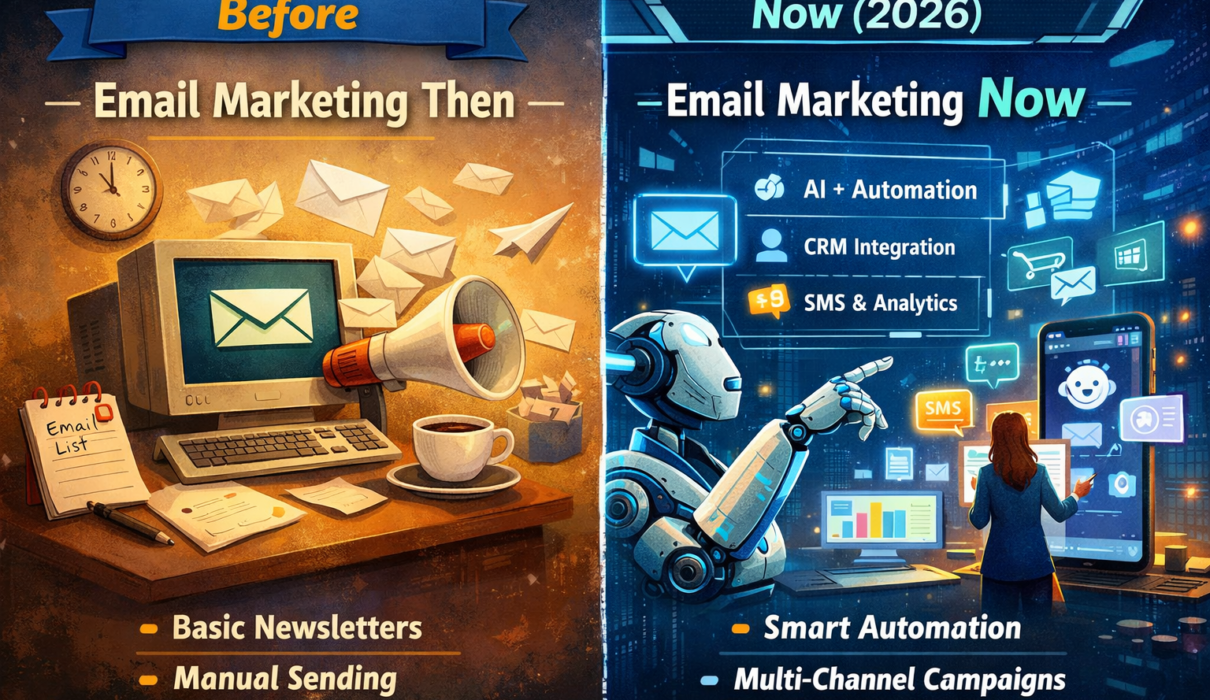
By Email marketing in 2026 remains one of the highest ROI digital marketing channels globally. While AI-powered search engines, automation ecosystems, and social commerce continue to evolve, email remains a direct, owned, and algorithm-independent communication channel.
Unlike social platforms, where reach depends on ever-changing algorithms, email gives businesses full control over audience communication.
Email marketing yields around $36–$42 ROI for every $1 spent, making it highly cost-effective. With over 4.6 billion email users worldwide, it remains one of the most scalable digital marketing channels.
But the landscape has changed.
The best email marketing tools in 2026 now include:
- AI-powered automation
- Predictive send-time optimization
- Advanced segmentation
- CRM integration
- Ecommerce workflows
- Multi-channel campaigns (Email + SMS + Push)
- Behavioral targeting
- Lead scoring
- Revenue attribution tracking
This guide covers:
- Best overall email marketing platforms
- Best free email marketing tools
- Best B2B email marketing software
- Best ecommerce email tools
- Best tools for creators and newsletters
- Cold email marketing tools
- Nonprofit email marketing tools
- Email marketing analytics platforms
- How to choose the right tool
Quick Comparison Table (Advanced 2026 Overview)
| Tool | Best For | Free Plan | Starting Price | CRM | SMS | AI Features | Automation |
| MailerLite | Beginners | Yes | $10/mo | Basic | No | Basic | Medium |
| Brevo | Multi-channel | Yes | $25/mo | Yes | Yes | Basic | Medium |
| ActiveCampaign | B2B Automation | No | $29/mo | Yes | Limited | Advanced | Advanced |
| beehiiv | Newsletter Monetization | Yes | $29/mo | No | No | Medium | Medium |
| Moosend | Budget Automation | Limited | $9/mo | No | No | Basic | Medium |
| HubSpot | Enterprise CRM | Yes | $50/mo | Yes | Add-on | Advanced | Advanced |
| Mailjet | API + Transactional | Yes | $15/mo | No | No | Basic | Medium |
| Omnisend | Ecommerce | Yes | $16/mo | Ecommerce | Yes | Advanced | Advanced |
| AWeber | Templates | Yes | $19/mo | Basic | No | Basic | Basic |
| Kit | Creators | Yes | $15/mo | No | No | Medium | Medium |
1. MailerLite Best for Beginners & Small Businesses
MailerLite is widely recognized as one of the most beginner-friendly email marketing platforms in 2026. It is designed specifically for small businesses, startups, freelancers, and nonprofits that want to launch professional email campaigns without dealing with complex technical setups.
Unlike enterprise-level tools that can feel overwhelming, MailerLite focuses on simplicity, usability, and affordability while still offering modern marketing features.
Key Features
Drag-and-Drop Email Editor
Create professional, mobile-responsive emails using an intuitive visual builder. No coding skills are required, making it ideal for non-technical users.
Automation Workflows
Set up automated email sequences such as welcome emails, lead nurturing campaigns, and follow-up messages based on subscriber actions.
Landing Pages & Forms
Build conversion-focused landing pages, pop-ups, and embedded forms to capture leads directly from your website or social media traffic.
Subscriber Segmentation
Organize contacts using tags, groups, and behavioral data to send more targeted and personalized campaigns.
Built-in Analytics & Reporting
Track open rates, click-through rates, subscriber growth, and campaign performance through an easy-to-understand dashboard.
Email Templates Library
Access professionally designed templates to speed up campaign creation and maintain consistent branding.
Why MailerLite Stands Out
MailerLite’s biggest advantage is its clean and minimal interface. The dashboard is easy to navigate, and automation setup is straightforward even for beginners.
Small businesses can quickly:
- Import contacts
- Create email campaigns
- Build automated sequences
- Track results
All without hiring a developer or marketing automation specialist.
The platform also offers competitive pricing, including a generous free plan, making it a low-risk option for businesses just starting with email marketing.
Limitations
While MailerLite is excellent for beginners, it does have some constraints:
- Automation logic is not as advanced as enterprise platforms like ActiveCampaign or HubSpot
- Fewer third-party integrations compared to larger ecosystems
- Limited built-in CRM capabilities
- Advanced AI personalization features are basic compared to premium tools
For businesses requiring complex conditional workflows, deep sales pipeline automation, or enterprise-level reporting, a more advanced platform may be necessary.
Best For
MailerLite is ideal for:
✔ Startups launching their first email campaigns
✔ Freelancers and solopreneurs
✔ Local service businesses
✔ Bloggers and content creators
✔ Nonprofits testing email outreach
✔ Small ecommerce stores with simple automation needs
Final Verdict (2026)
If you are looking for a simple, affordable, and reliable email marketing platform, MailerLite remains one of the best choices in 2026. It provides the essential tools needed to grow an audience, nurture leads, and run automated campaigns, without overwhelming users with unnecessary complexity.
For small businesses prioritizing ease of use and cost-effectiveness, MailerLite delivers strong value and solid performance.
2 Brevo Best Free Multi-Channel Marketing Platform in 2026
Brevo (formerly Sendinblue) has evolved into one of the most powerful multi-channel marketing platforms in 2026. Unlike traditional email-only tools, Brevo combines email marketing, SMS campaigns, CRM, automation workflows, and transactional messaging inside one unified dashboard.
For businesses looking to centralize communication without paying for multiple tools, Brevo offers a strong balance between affordability and functionality.
1 Email + SMS Marketing in One Platform
Brevo allows you to run:
- Promotional email campaigns
- Transactional emails (order confirmations, password resets)
- SMS campaigns
- WhatsApp messaging (in selected regions)
This multi-channel capability allows businesses to build cross-channel automation flows like:
Abandoned cart → Email reminder → SMS follow-up → Discount offer email
This increases engagement and recovery rates compared to email-only workflows.
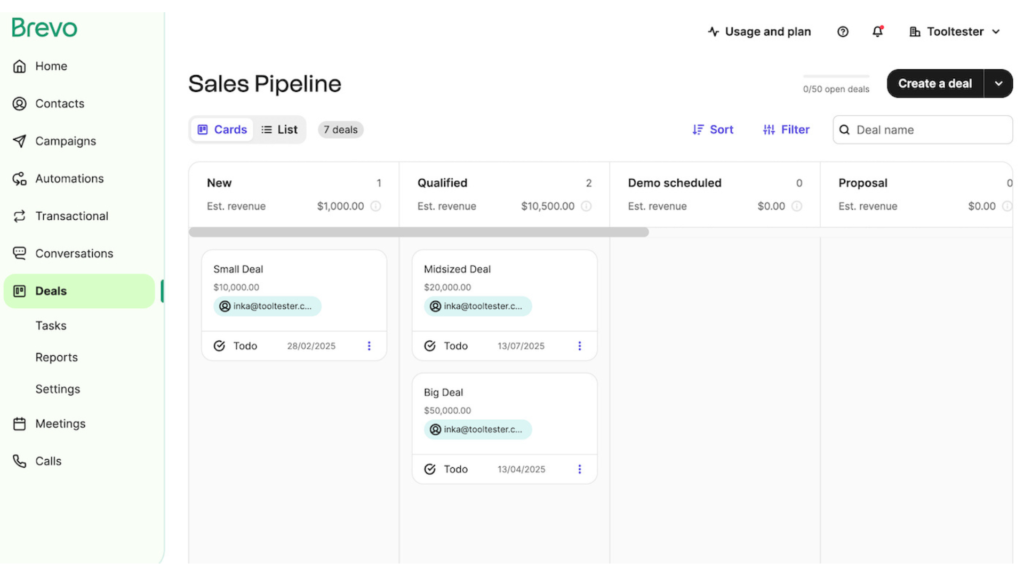
2 Built-in CRM System
Unlike tools that require external CRM integration, Brevo includes a built-in CRM.
CRM features include:
- Contact management
- Deal tracking
- Sales pipelines
- Task management
- Contact activity tracking
For small and mid-sized businesses, this eliminates the need for separate CRM software like enterprise-level systems.
3 Visual Automation Builder
Brevo’s automation builder allows you to create workflows based on:
- Email opens
- Link clicks
- Website visits
- Purchase behavior
- Contact properties
Example automation:
- User downloads lead magnet
- Wait 2 days
- Send follow-up email
- If clicked → Add to sales pipeline
- If not opened → Send reminder email
This makes it ideal for lead nurturing and ecommerce retention campaigns.
4 Transactional Email Capabilities
Brevo is strong in transactional messaging:
- Order confirmations
- Shipping notifications
- Account alerts
- OTP emails
- System-generated notifications
This makes it suitable for ecommerce stores, SaaS companies, and marketplaces.
5 Advanced Segmentation
Brevo supports dynamic segmentation based on:
- Demographics
- Purchase history
- Engagement behavior
- Custom fields
- CRM data
This enables targeted messaging instead of sending bulk campaigns to all subscribers.
6 A/B Testing
Brevo supports A/B testing for:
- Subject lines
- Email content
- Send time optimization
Testing improves open rates and CTR over time.
Pricing & Free Plan (2026 Overview)
Brevo’s free plan is one of its strongest advantages:
- Unlimited contacts
- 300 emails per day
- Basic automation
- Built-in CRM
- Transactional email support
Paid plans start affordably and scale based on email volume rather than contact count, which can reduce costs for growing lists.
Why Brevo Is Powerful in 2026
In 2026, marketing is no longer single-channel. Businesses need:
- SMS
- CRM tracking
- Automation
- Behavioral targeting
Brevo combines these into one ecosystem without requiring expensive integrations.
It’s particularly strong for:
- Local service businesses
- Ecommerce brands
- SaaS startups
- Agencies managing multiple client accounts
Pros & Cons
Pros
- Generous free plan
- Multi-channel marketing (Email + SMS)
- Built-in CRM
- Strong transactional email support
- Affordable scaling
Cons
- Daily sending limit on free plan
- Automation depth lower than enterprise tools like ActiveCampaign
- Interface may feel complex for absolute beginners
Best Use Cases
Brevo is ideal for:
✔ Small to mid-sized businesses
✔ Ecommerce stores needing SMS + email
✔ Startups wanting CRM + automation in one tool
✔ Agencies managing campaigns for clients
✔ Businesses that send both marketing and transactional emails
Who Should NOT Choose Brevo?
Brevo may not be ideal if:
- You need extremely advanced automation logic
- You require enterprise-level reporting
- You want very deep AI personalization features
In those cases, tools like HubSpot or ActiveCampaign may offer more depth.
Final Verdict on Brevo (2026)
Brevo stands out as one of the best free multi-channel marketing platforms in 2026 because it combines:
- Email marketing
- SMS campaigns
- CRM
- Automation
- Transactional messaging
All within a single affordable ecosystem.
For growing businesses that want centralized communication without enterprise pricing, Brevo delivers exceptional value.
3 ActiveCampaign Best for Advanced Automation
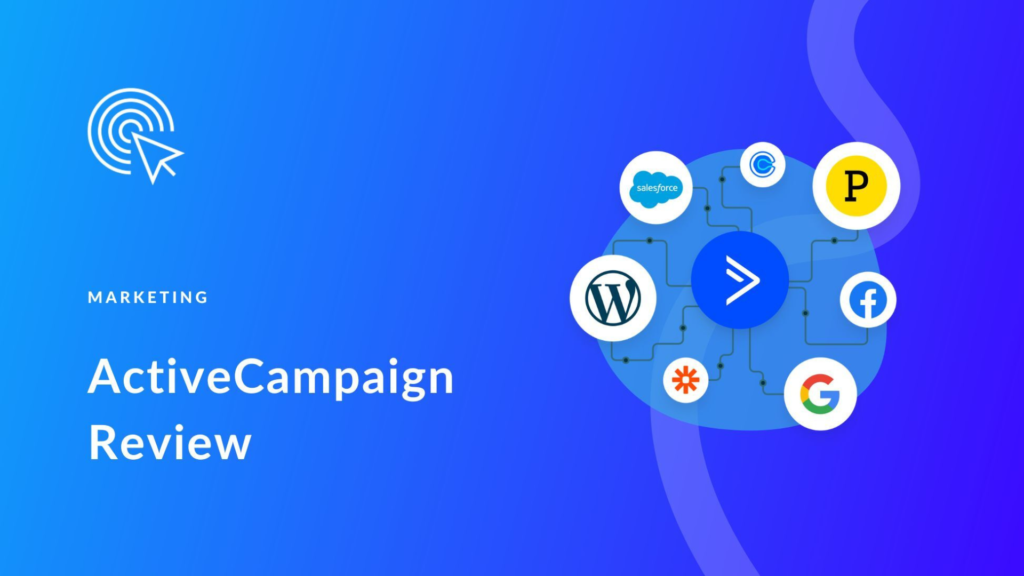
ActiveCampaign is one of the most powerful automation-driven email marketing platforms available in 2026. It is designed for businesses that want more than basic email campaigns and need deep, behavior-based automation combined with CRM and sales tools.
If your focus is lead nurturing, advanced segmentation, personalized customer journeys, and sales pipeline automation, ActiveCampaign stands out as a premium solution.
Advanced Features
- 900+ pre-built automation templates
- Predictive sending (AI-based send time optimization)
- AI-powered personalization
- Advanced lead scoring
- Built-in CRM with sales automation
- Conditional logic workflows
- Dynamic email content
- Website and event tracking
ActiveCampaign’s visual automation builder allows you to combine multiple triggers, conditions, and actions to create highly customized marketing journeys.
Automation Capabilities (In Depth)
The true strength of ActiveCampaign lies in its conditional logic and behavioral automation.
Example workflow:
- A user visits your website
- Views a specific product page
- An automated email sequence is triggered
- If they open the email → Send follow-up offer
- If they click → Add to sales pipeline
- If they ignore → Trigger reminder sequence
- If they purchase → Launch upsell automation
This level of intelligent automation helps businesses increase conversions and improve customer engagement.
The platform also uses predictive sending, where AI determines the optimal time to deliver emails based on each subscriber’s previous engagement behavior. This boosts both email open rates and click-through performance.
CRM & Sales Automation
ActiveCampaign includes a fully integrated CRM system, not just contact storage.
It allows businesses to:
- Manage deal pipelines
- Assign tasks to sales reps
- Automate follow-ups
- Track sales activity
- Monitor revenue attribution
This tight integration between marketing and sales helps align teams and improve closing rates.
Why Businesses Choose ActiveCampaign
Businesses choose ActiveCampaign because it offers:
✔ Deep automation flexibility
✔ Advanced segmentation capabilities
✔ Built-in lead scoring
✔ Marketing + sales integration
✔ High-level personalization
It is not just an email tool, it is a complete customer experience automation platform.
Pros
✔ Extremely powerful automation engine
✔ Strong CRM integration
✔ Advanced AI features
✔ Detailed reporting and analytics
✔ Highly scalable
Cons
✘ Higher pricing than beginner platforms
✘ More challenging for beginners to learn and use
✘ May be too advanced for simple newsletter campaigns
If you only need basic email campaigns, tools like MailerLite or Brevo may be easier and more cost-effective.
Best For
- SaaS companies
- B2B brands
- Agencies
- Consultants
- Sales-driven organizations
- Businesses with complex automation needs
Final Verdict (2026)
If advanced automation, CRM integration, and AI-driven personalization are your priorities, ActiveCampaign remains one of the strongest platforms available in 2026.
It’s perfect for companies aiming to:
- Optimize lead nurturing
- Automate sales pipelines
- Build personalized customer journeys
- Align marketing and sales teams
- Scale efficiently with automation
4 beehiiv Best for Newsletter Monetization
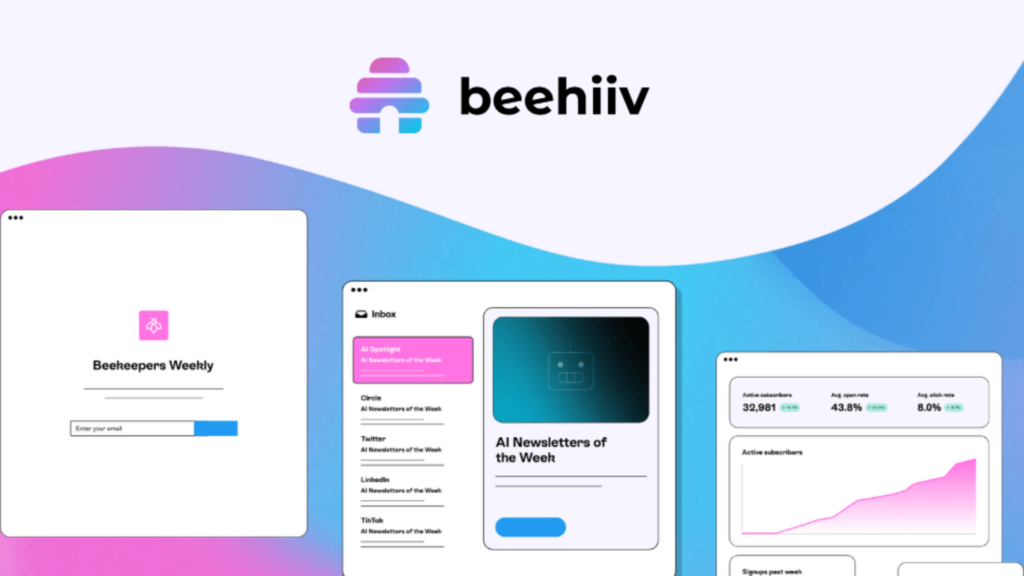
beehiiv is specifically built for newsletter-first businesses in 2026. Unlike traditional email marketing platforms that focus on ecommerce or automation-heavy workflows, beehiiv is designed for creators, publishers, and media brands that want to grow and monetize their audience directly through newsletters.
If your primary product is content not physical goods or SaaS beehiiv provides a purpose-built ecosystem for growth and revenue generation.
Key Features
- Paid newsletter subscriptions
- Built-in referral growth programs
- Native ad network for sponsorship revenue
- Creator-focused analytics dashboard
- Audience segmentation and tagging
- No-code landing page builder
- Custom domains and branding
- Email sequences and basic automation
Monetization Capabilities
One of beehiiv’s biggest advantages is its built-in monetization system.
Creators can:
- Launch paid subscriptions
- Offer premium newsletter tiers
- Accept recurring memberships
- Monetize through integrated ad placements
Unlike traditional email tools that require third-party integrations for subscription payments, beehiiv allows you to manage paid newsletters directly inside the platform.
This makes it ideal for:
- Independent journalists
- Content creators
- Niche publishers
- Media startups
Growth & Referral Engine
beehiiv includes a powerful referral growth system.
Subscribers can:
- Refer friends
- Unlock rewards
- Participate in tier-based incentives
Referral programs help newsletters grow organically without relying solely on paid ads.
For creators focused on audience expansion, this feature provides a strong competitive advantage.
Analytics & Creator Insights
beehiiv provides analytics tailored specifically for newsletter businesses, including:
- Subscriber growth tracking
- Referral performance
- Revenue metrics
- Engagement analytics
- Churn analysis for paid subscribers
These insights are especially valuable for media brands focused on retention and subscription growth.
Why Creators Choose beehiiv
Creators choose beehiiv because:
✔ It is built specifically for newsletter businesses
✔ Monetization tools are native, not add-ons
✔ Referral system boosts organic growth
✔ Clean, creator-focused interface
✔ Strong branding and customization options
It removes the need to combine multiple tools for payments, ads, and email delivery.
Pros
✔ Built-in subscription monetization
✔ Integrated ad network
✔ Strong referral growth features
✔ Clean and modern UI
✔ Designed specifically for creators
Cons
✘ Not ideal for ecommerce automation
✘ Limited advanced CRM functionality
✘ Automation depth lower than enterprise platforms
If you need advanced automation or CRM integration, tools like ActiveCampaign or HubSpot may be more suitable.
Best For
- Newsletter-first businesses
- Independent creators
- Journalists
- Media startups
- Niche publishers
- Personal brands
Final Verdict (2026)
beehiiv stands out in 2026 as one of the best platforms for newsletter monetization and audience growth.
If your business model revolves around content, subscriptions, and community building rather than product sales beehiiv provides the tools needed to grow and generate revenue from your audience directly.
5 Moosend Best Affordable Automation Tool
Moosend is one of the most cost-effective email marketing platforms in 2026 for businesses that want automation without paying enterprise-level prices. It bridges the gap between beginner-friendly tools and advanced automation platforms by offering solid workflow capabilities at a budget-friendly cost.
For small businesses that need more than basic newsletters but cannot justify the higher pricing of premium tools, Moosend provides strong value.
Key Features
- Visual automation workflow builder
- Pre-built automation templates
- Audience segmentation
- Drag-and-drop email editor
- Landing page builder
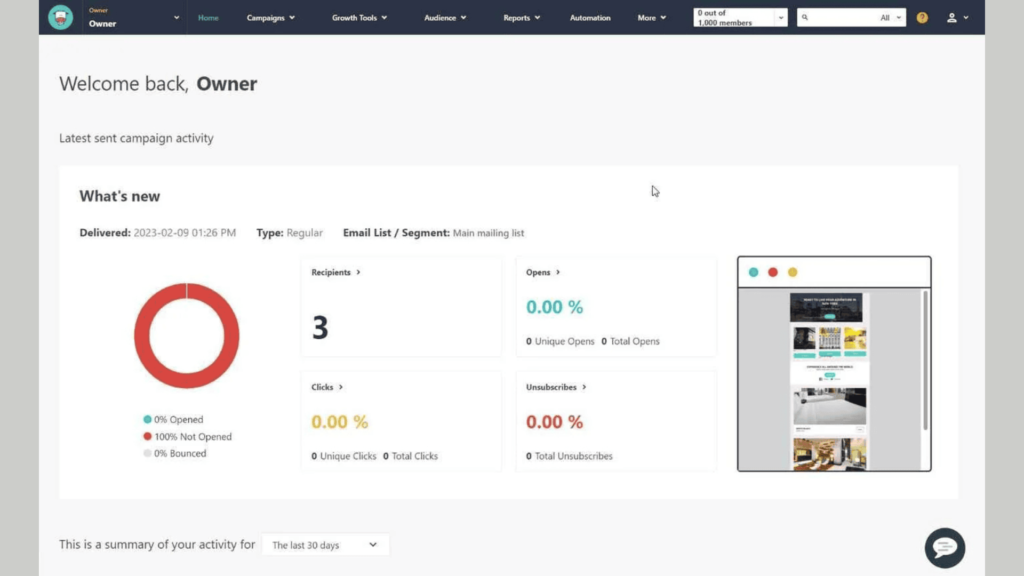
- Real-time analytics and reporting
- List management tools
- Personalization tags
Automation Capabilities
Moosend offers automation features that go beyond simple drip campaigns.
Businesses can create workflows triggered by:
- Subscriber sign-ups
- Email engagement (opens and clicks)
- Purchase behavior
- Cart abandonment
- Custom events
Example workflow:
New subscriber joins →
Welcome email sequence →
If clicks product link → Send offer →
If no engagement → Trigger reminder →
If purchase completed → Send upsell campaign
This level of automation helps small businesses improve engagement and conversions without complex setup.
Why It’s Affordable Yet Powerful
Moosend’s pricing structure makes it attractive for startups and growing brands. It offers automation features that are often found in higher-priced platforms but at a lower entry cost.
Unlike enterprise tools such as ActiveCampaign, Moosend keeps the interface simpler and more accessible. This reduces the learning curve while still providing essential automation tools.
It is particularly strong for:
- Small ecommerce brands
- Coaches and consultants
- Bloggers
- Service-based businesses
Pros
✔ Budget-friendly pricing
✔ Strong automation for the price
✔ Easy-to-use interface
✔ Good segmentation tools
✔ Suitable for growing businesses
Cons
✘ Limited built-in CRM features
✘ Supports fewer external integrations compared to bigger platforms
✘ Less advanced AI personalization
Businesses that require deep CRM integration or enterprise-level analytics may prefer platforms like HubSpot.
Best For
- Small businesses
- Startups
- Budget-conscious brands
- Ecommerce stores needing affordable automation
- Service providers
Final Verdict (2026)
Moosend stands out as one of the best affordable automation tools in 2026. It delivers strong workflow capabilities, segmentation, and campaign management at a price point accessible to smaller businesses.
If you want automation without high monthly fees, Moosend offers an excellent balance between cost and functionality.
6 HubSpot – Best All-in-One CRM + Marketing Platform
HubSpot is one of the most comprehensive marketing and CRM platforms available in 2026. Unlike standalone email tools, HubSpot combines email marketing, full CRM functionality, sales pipeline management, automation, customer service tools, and advanced reporting into one integrated ecosystem.
For businesses looking to align marketing, sales, and customer operations under one platform, HubSpot offers a scalable enterprise-ready solution.
Key Features
- Advanced marketing automation workflows
- Full-featured CRM system
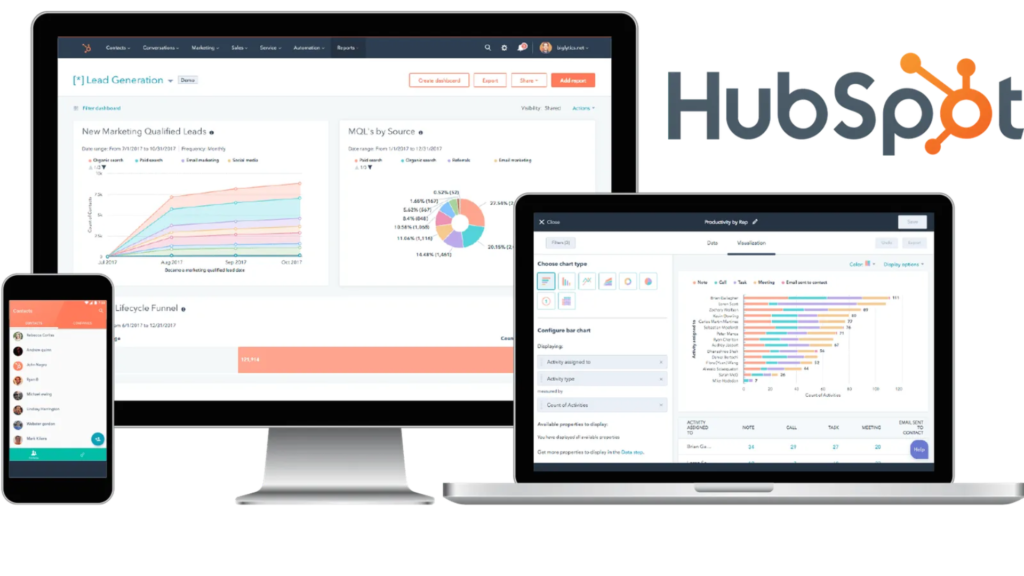
- Marketing analytics dashboards
- Sales pipeline tracking
- Lead scoring and qualification
- Landing page and form builder
- Multi-channel campaign management
- Revenue attribution reporting
Automation & Marketing Capabilities
HubSpot allows businesses to build sophisticated automation workflows based on:
- Email engagement
- Website behavior
- Form submissions
- CRM lifecycle stages
- Deal activity
Example workflow:
Visitor downloads a resource →
Added to CRM →
Assigned lifecycle stage →
Enters email nurture sequence →
If high engagement → Sales rep notified →
If deal created → Automated follow-ups triggered
This tight integration between marketing automation and CRM makes HubSpot extremely powerful for growth-focused companies.
CRM & Sales Alignment
HubSpot’s CRM is not an add-on, it is the foundation of the platform.
Businesses can:
- Manage contacts and companies
- Track deal pipelines
- Assign tasks to sales reps
- Automate follow-ups
- Monitor customer interactions
- Track revenue attribution
Marketing and sales teams operate on a shared dataset, minimizing bottlenecks and boosting conversion efficiency.
Analytics & Reporting
HubSpot provides advanced dashboards that track:
- Campaign performance
- Lead sources
- Customer acquisition cost
- Conversion rates
- Sales performance
- Revenue generated from email campaigns
This level of reporting makes it ideal for businesses that rely heavily on data-driven decision-making.
Why Businesses Choose HubSpot
✔ All-in-one marketing + CRM ecosystem
✔ Advanced automation capabilities
✔ Strong sales pipeline management
✔ Detailed reporting and attribution
✔ Scalable for enterprise growth
HubSpot eliminates the need to integrate multiple tools for CRM, email marketing, and sales tracking.
Pros
✔ Complete business growth platform
✔ Powerful CRM and automation integration
✔ Enterprise-level analytics
✔ Scalable architecture
✔ Strong brand reliability
Cons
✘ Higher pricing compared to standalone email tools
✘ Advanced features require premium tiers
✘ May be excessive for very small businesses
If you only need basic email campaigns, simpler tools like MailerLite or Moosend may be more cost-effective.
Best For
- Scaling businesses
- Enterprise organizations
- SaaS companies
- B2B brands
- Sales-driven teams
- Companies needing marketing + CRM integration
Final Verdict (2026)
HubSpot remains one of the best all-in-one CRM and marketing platforms in 2026. It is ideal for businesses that want to unify marketing automation, CRM, sales tracking, and reporting under a single scalable system.
If your organization is focused on long-term growth, team alignment, and data-driven marketing, HubSpot offers one of the most complete ecosystems available.
7 Mailjet Top Choice for API-Driven and Transactional Email Solutions
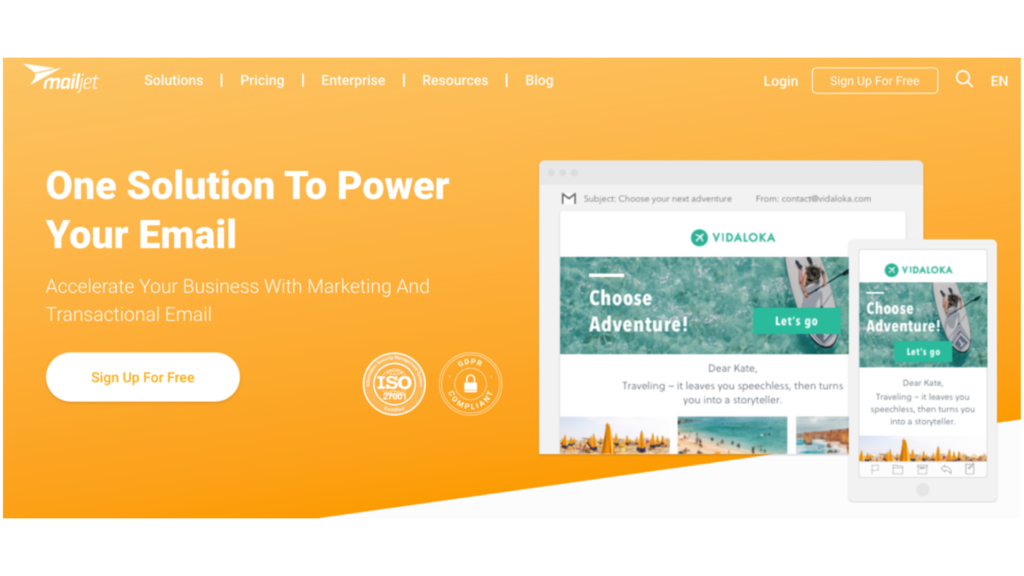
Mailjet is a powerful email platform designed for developers, SaaS businesses, and companies that need both marketing and transactional email capabilities. Unlike traditional email tools focused only on newsletters, Mailjet combines email delivery infrastructure with marketing automation and API access, making it ideal for technical teams and product-driven businesses.
Key Features
- Transactional email support (order confirmations, password resets, alerts)
- Email API for developers
- Marketing campaigns and newsletter sending
- A/B testing
- Contact segmentation
- Real-time analytics and deliverability tracking
- SMTP relay and webhook support
- Multi-user collaboration with role-based permissions
Why Mailjet Stands Out
Mailjet is built to handle high-volume, reliable email delivery while still offering marketing tools. Businesses can:
- Send critical transactional emails programmatically via API
- Launch marketing campaigns without switching platforms
- Monitor email delivery, open rates, and click activity instantly
- Collaborate on email templates with multiple team members
This makes it particularly valuable for SaaS platforms, ecommerce stores, and tech-focused companies where email reliability and developer integration are priorities.
Automation & Campaign Management
While Mailjet’s automation is not as advanced as ActiveCampaign, it still supports:
- Welcome emails
- Triggered campaigns based on user actions
- Segmentation-based personalization
- Drip email sequences
Combined with its transactional email capabilities, Mailjet allows businesses to maintain consistent communication with customers across both marketing and operational touchpoints.
Pros
✔ Powerful email API for developers
✔ Reliable transactional email delivery
✔ Multi-user collaboration
✔ Marketing + transactional emails in one platform
✔ Real-time analytics
Cons
✘ Advanced marketing automation is limited compared to enterprise tools
✘ Fewer integrations than larger marketing suites
✘ Interface may feel technical for non-developers
Best For
- SaaS companies
- Tech startups
- Ecommerce platforms needing transactional emails
- Developers managing email infrastructure
- Businesses combining marketing and operational emails
Final Verdict (2026)
Mailjet remains one of the best platforms in 2026 for businesses that need both transactional and marketing email capabilities. Its robust API, reliable delivery, and combined marketing features make it an ideal choice for developer-driven teams and SaaS companies.
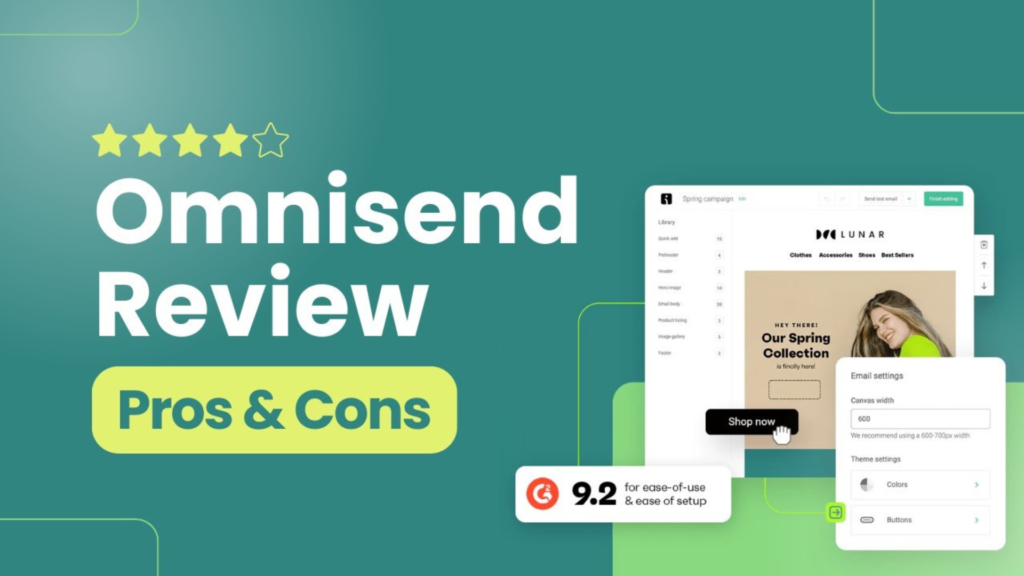
8 Omnisend Best for Ecommerce Automation
Omnisend is built specifically for ecommerce businesses in 2026. Unlike general email marketing platforms, Omnisend focuses entirely on online stores and direct-to-consumer (DTC) brands that need automated revenue-generating workflows.
If your business runs on platforms like Shopify or WooCommerce, Omnisend provides ready-to-launch ecommerce automation flows designed to increase sales and customer retention.
Ecommerce Workflows
- Abandoned cart automation
- Product recommendation emails
- Post-purchase follow-ups
- Browse abandonment campaigns
- Cross-sell and upsell sequences
- SMS reminders
- Welcome discount flows
- Re-engagement campaigns
These workflows are pre-built and optimized for ecommerce conversion, making setup fast and efficient.
Automation & Revenue Focus
Omnisend’s biggest strength is its revenue-first automation structure.
Example workflow:
Customer adds product to cart →
Leaves without checkout →
Abandoned cart email sent →
If no response → SMS reminder triggered →
If purchase completed → Post-purchase thank-you + cross-sell offer
This multi-channel approach (Email + SMS) significantly improves recovery rates compared to email-only campaigns.
Omnisend also supports dynamic product recommendations based on browsing and purchase history, which increases average order value.
Ecommerce Integrations
Omnisend integrates seamlessly with:
- Shopify
- WooCommerce
- BigCommerce
- Magento
- Custom ecommerce stores via API
Product data, customer behavior, and order history sync automatically, allowing highly personalized campaigns without manual setup.
Why Ecommerce Brands Choose Omnisend
✔ Pre-built ecommerce automation flows
✔ Strong abandoned cart recovery tools
✔ Email + SMS integration
✔ Dynamic product recommendations
✔ Revenue attribution tracking
Unlike broader platforms like HubSpot or ActiveCampaign, Omnisend focuses entirely on ecommerce optimization rather than general CRM automation.
Pros
✔ Designed specifically for online stores
✔ Seamlessly connects with leading ecommerce platforms
✔ Multi-channel automation (Email + SMS)
✔ Revenue tracking dashboards
✔ Strong free plan for small stores
Cons
✘ Not ideal for B2B or service-based businesses
✘ Limited CRM functionality compared to enterprise tools
✘ Access to premium features often requires upgrading to higher-level plans
Best For
- DTC brands
- Shopify stores
- WooCommerce stores
- Ecommerce startups
- Online retailers scaling revenue
Final Verdict (2026)
Omnisend remains one of the best ecommerce email marketing tools in 2026. Its automation-first, revenue-focused design makes it ideal for online stores looking to increase conversions, recover abandoned carts, and boost repeat purchases.
If your primary goal is ecommerce growth rather than general CRM management, Omnisend provides a purpose-built solution tailored specifically for online retail success.
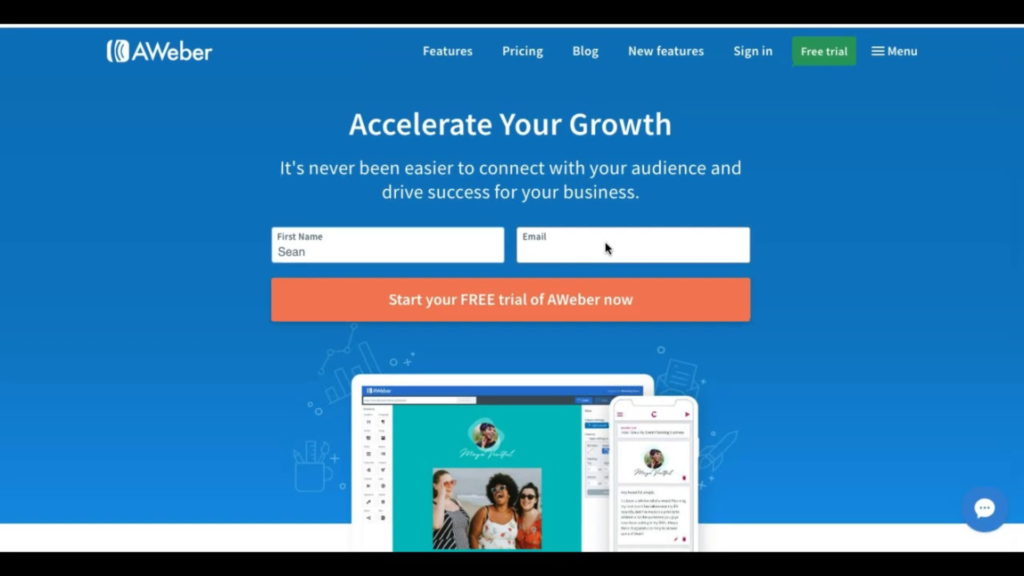
9 AWeber Best for Email Design
AWeber is one of the most design-focused email marketing platforms in 2026. While many tools prioritize automation depth or CRM integration, AWeber stands out for its large template library, branding flexibility, and ease of use.
For marketers who value strong visual presentation and polished email layouts, AWeber provides one of the most extensive collections of ready-to-use templates in the industry.
Key Features
- 600+ professionally designed email templates
- Drag-and-drop email builder
- Brand customization tools
- Pre-built newsletter layouts
- Landing page builder
- Basic automation sequences
- List segmentation
- Built-in analytics dashboard
Email Design & Branding Strength
AWeber’s biggest advantage is its template ecosystem.
Businesses can:
- Choose from hundreds of responsive templates
- Customize fonts, colors, and layouts
- Match brand identity easily
- Create visually consistent campaigns
All templates are mobile-responsive, ensuring emails look professional across devices which is essential in 2026 when most users check email on smartphones.
For small businesses without dedicated designers, AWeber significantly reduces the time required to create visually appealing campaigns.
Automation & Campaign Management
While AWeber is not as automation-heavy as platforms like ActiveCampaign, it still supports:
- Welcome sequences
- Basic drip campaigns
- Tag-based automation
- Subscriber segmentation
- Broadcast campaigns
This makes it suitable for marketers who need simple automation combined with strong visual branding.
Why Marketers Choose AWeber
✔ Large template library
✔ Easy-to-use email editor
✔ Strong branding customization
✔ Beginner-friendly interface
✔ Reliable email deliverability
It is particularly attractive for entrepreneurs and small teams who want professional-looking campaigns without complex automation setup.
Pros
✔ 600+ customizable templates
✔ Clean and intuitive design builder
✔ Good deliverability rates
✔ Strong branding flexibility
✔ Suitable for beginners
Cons
✘ Limited advanced automation
✘ Basic CRM functionality
✘ Fewer enterprise-level features
Businesses needing advanced behavioral automation or deep CRM integration may prefer platforms like HubSpot.
Best For
- Small businesses
- Entrepreneurs
- Bloggers
- Coaches and consultants
- Marketers prioritizing visual design
- Brands focused on newsletters
Final Verdict (2026)
AWeber remains one of the best email marketing tools for design-focused campaigns in 2026. Its extensive template library and easy customization options make it ideal for businesses that prioritize strong branding and professional presentation.
If your strategy centers on visually appealing newsletters rather than complex automation systems, AWeber provides a simple, reliable, and design-forward solution.
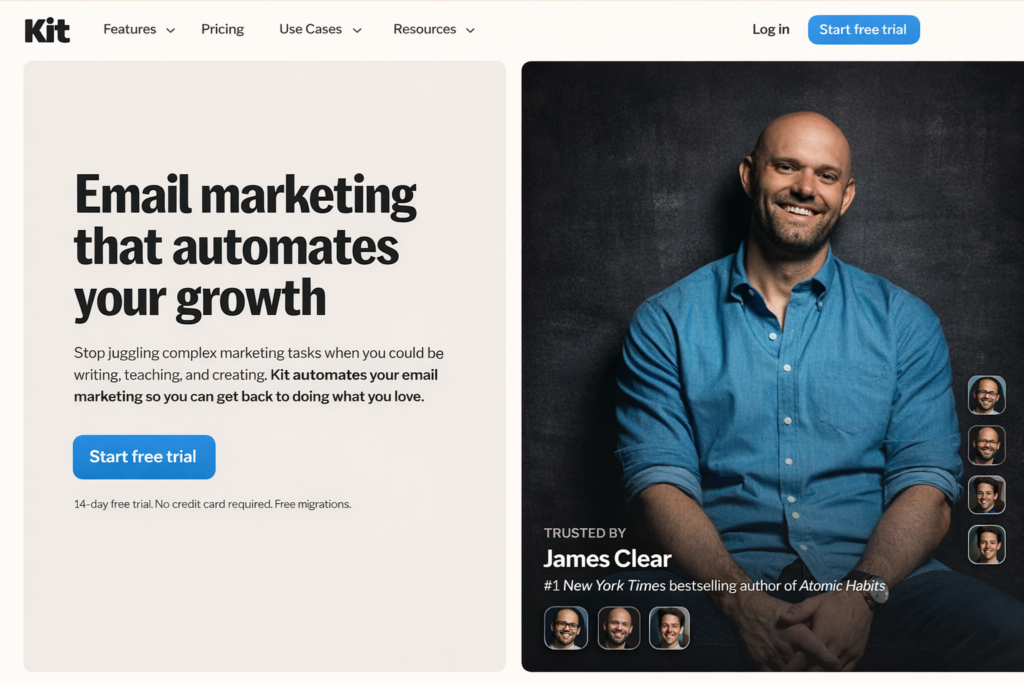
10 Kit Best for Creators & Bloggers
Kit is designed specifically for creators, bloggers, online educators, and digital entrepreneurs. Unlike traditional email marketing platforms that focus heavily on ecommerce or corporate CRM systems, Kit simplifies email marketing for content-driven businesses.
Its core strength lies in audience tagging, subscriber segmentation, and automation built around content consumption and creator monetization.
Key Features
- Tag-based subscriber system (instead of complex lists)
- Visual automation builder
- Creator-focused landing pages
- Paid newsletter options
- Digital product selling tools
- Integration with course and membership platforms
- Email sequences for content funnels
- Subscriber engagement tracking
Tag-Based Audience System
One of Kit’s biggest advantages is its tag-based organization model.
Instead of managing multiple email lists, creators can:
- Tag subscribers based on interests
- Trigger automation based on link clicks
- Segment audiences by content behavior
- Deliver highly personalized emails
For example:
Subscriber downloads an SEO guide →
Gets tagged “SEO Interest” →
Receives a 5-day SEO email course →
Offered a paid workshop at the end
This makes content monetization smoother and more structured.
Built for Content Monetization
Kit supports creators in turning audiences into revenue through:
- Digital product sales
- Paid newsletters
- Online course promotion
- Affiliate marketing funnels
- Automated content upgrades
It integrates easily with platforms like:
- Teachable
- Kajabi
- WordPress
- Stripe
This makes it especially valuable for bloggers and educators running content-based businesses.
Why Creators Choose Kit
✔ Simplified tagging system
✔ Content-driven automation
✔ Clean and minimal email design
✔ Integrated features for monetizing digital products
✔ Easy landing page creation
Unlike ecommerce-focused tools such as Omnisend, Kit prioritizes content marketing and audience growth.
Pros
✔ Designed specifically for creators
✔ Easy segmentation through tagging
✔ Strong automation for content funnels
✔ Supports digital product monetization
✔ Beginner-friendly setup
Cons
✘ Not ideal for large ecommerce stores
✘ Limited enterprise CRM functionality
✘ Fewer advanced automation templates compared to ActiveCampaign
Best For
- Bloggers
- YouTubers
- Podcasters
- Online educators
- Coaches
- Newsletter-first businesses
- Digital product creators
Final Verdict (2026)
Kit continues to be a top email marketing solution for creators in 2026. Its tagging system, automation simplicity, and monetization features make it ideal for content-driven entrepreneurs who want to grow and nurture an engaged audience.
If your business revolves around content, community, and digital products rather than ecommerce inventory or enterprise CRM systems, Kit offers a streamlined, creator-first solution.
Best Free Email Marketing Tools in 2026
Free tools are more powerful than ever.
Top free platforms:
- MailerLite
- Brevo
- HubSpot
- Mailchimp
- Omnisend
- AWeber
- Benchmark Email
- Sender
- SendPulse
- Mailercloud
Free plans typically include:
- Subscriber limits
- Daily send limits
- Basic automation
- Analytics dashboards
Ideal for startups, nonprofits, and creators.
Best B2B Email Marketing Tools
Top platforms:
- ActiveCampaign
- HubSpot
Key B2B features:
- Lead scoring
- CRM sync
- Behavioral tracking
- Sales automation
- Multi-touch sequences
Ideal for SaaS, consultants, agencies, and enterprise sales teams.
Best Ecommerce Email Marketing Tools
Top choice: Omnisend
Key ecommerce features:
- Abandoned cart recovery
- Dynamic product recommendations
- Revenue attribution
- SMS + email combined flows
Best Cold Email Marketing Tools
For professional cold outreach, tools must include:
- Automated sequences
- Personalization tokens
- Follow-up logic
- Compliance support (CAN-SPAM, GDPR)
Best platforms: ActiveCampaign, HubSpot.
Email Marketing Analytics Tools
Modern analytics tools track:
- Open rates
- CTR
- Conversions
- Bounce rate
- Revenue per email
- ROI
Top analytics platforms:
- HubSpot
- ActiveCampaign
- MailerLite
Analytics enables optimization through segmentation and automation refinement.
How to Choose the Best Email Marketing Tool in 2026
Before choosing a tool, consider:
1 Subscriber Size
Some tools scale better than others.
2 Automation Needs
Simple drip campaigns vs complex conditional workflows.
3 CRM Integration
Do you need built-in CRM?
4 Ecommerce Integration
Shopify, WooCommerce, BigCommerce support?
5 Budget
Free vs scalable paid plans.
6 AI Capabilities
Predictive sending, AI content suggestions.
Frequently Asked Questions (FAQs)
Which email marketing platform is considered the best in 2026?
The best email marketing tool in 2026 depends on your business type and goals:
- ActiveCampaign – Best for advanced automation and behavior-based marketing
- Omnisend – Best for ecommerce and DTC brands
- HubSpot – Best for enterprise and all-in-one CRM solutions
- MailerLite – Ideal for Beginners and Small Business Users
There is no single “perfect” tool, the right choice depends on whether you need automation, ecommerce workflows, CRM integration, or simplicity.
Are there free email marketing tools available?
Yes, several email marketing platforms offer free plans with limited features and subscriber caps. Popular free options include:
- MailerLite
- Brevo
- HubSpot
- Mailchimp
- AWeber
Free plans are ideal for startups, creators, and small businesses testing email marketing before upgrading to paid automation features.
Which email marketing platform is most effective for ecommerce businesses?
Omnisend is widely considered the best ecommerce-focused email marketing platform in 2026.
It offers:
- Abandoned cart automation
- Product recommendations
- Post-purchase workflows
- SMS marketing integration
- Direct integrations with Shopify and WooCommerce
For online stores looking to increase conversions and recover lost sales, Omnisend provides purpose-built ecommerce automation.
Which tool is best for B2B marketing?
For B2B businesses, the top choices are:
- ActiveCampaign, Strong for lead scoring, automation, and behavioral segmentation
- HubSpot – Best for integrated CRM, sales pipeline tracking, and enterprise reporting
Both platforms support long sales cycles, detailed contact management, and advanced personalization required in B2B environments.
Is email marketing still effective in 2026?
Indeed, email marketing continues to deliver some of the highest returns on investment among digital marketing channels worldwide.
In 2026, email is enhanced by:
- AI-powered personalization
- Behavioral automation
- Advanced segmentation
- Omnichannel integration (Email + SMS)
Unlike social media platforms that rely on algorithms, email gives businesses direct access to their audience, making it a reliable and scalable growth channel for ecommerce, B2B, and content-driven brands.
Final Thoughts
The best email marketing tools in 2026 are AI-driven, automation-focused, and deeply integrated with CRM and analytics systems. Modern platforms are no longer just about sending newsletters, they are built to generate revenue, personalize communication, and scale customer relationships.
When choosing the right platform, consider:
- Your budget
- Level of automation needed
- CRM and sales integration requirements
- Ecommerce capabilities
- Long-term scalability
Email marketing in 2026 is smarter, data-driven, and performance-focused. With the right platform, businesses can:
- Increase audience engagement
- Nurture leads effectively
- Improve conversions
- Maximize ROI consistently
The right tool doesn’t just send emails, it builds predictable, automated growth.